For your Europe trip, choose carry-on luggage that fits strict size limits around 55 x 40 x 20 cm and stays under tight weight restrictions, usually about 8 kg. Soft-sided bags or backpacks offer flexibility and ease on cobblestones, while hard-shell cases protect electronics. Look for durable wheels and handles for varied terrain. Pre-paying baggage fees can save you money, especially with budget airlines. Keep these tips in mind, and you’ll find the perfect luggage for smooth, cost-effective travel.
How European Carry-On Rules Differ From US Standards
Although carry-on luggage rules vary widely, European airlines generally enforce stricter weight and size limits than US carriers, which can catch travelers off guard. You’ll find US domestic limits often reach 35 lbs, while European budget airlines like Ryanair cap carry-ons at just 15 lbs.
Unlike in the US, where carry-ons are rarely weighed, European and UK airlines frequently check weight at the gate. Turkish Airlines, for example, enforces strict size and weight limits on all Economy fares at check-in to avoid surprises.
Also, US travelers tend to use rigid bags sized for domestic flights, but these often don’t fit European sizers due to smaller, metric-based restrictions, so flexible, soft-sided luggage works better overseas. The safest carry-on size to follow for most airlines worldwide is Ryanair’s 55cm x 40cm x 20cm dimension, which fits even the strictest European standards and is widely accepted across Asia and Africa standard size.
What Size Limits Apply to European Carry-Ons

When you fly within Europe, you’ll find that most airlines limit carry-on luggage to around 55 x 40 x 20 cm (21.7 x 15.7 x 7.9 inches), including wheels and handles. Each airline sets its own rules—Ryanair sticks to the standard 55 x 40 x 20 cm, while Air France and KLM allow slightly different sizes like 55 x 35 x 25 cm. Iberia offers a bit more room at 56 x 45 x 25 cm. Keep in mind these measurements include all external parts. Ryanair also enforces these limits strictly at the gate using size sizers to prevent oversized bags from boarding. To avoid surprises, always check your airline’s specific size limits before packing. Using a carry-on bag that fits these dimensions is crucial to avoid last-minute checked baggage and ensure smooth boarding.
Why Carry-On Weight Is More Important for Europe
Because European airlines strictly enforce carry-on weight limits, you need to be more mindful about how much your bag weighs before boarding. Unlike many U.S. carriers, European airlines weigh your luggage and penalize you if it’s too heavy. This guarantees flight safety and controls operational costs.
To avoid issues:
- Most airlines limit carry-ons to 7–10 kg, often 8 kg
- Budget airlines like Ryanair enforce stricter rules
- Scales at gates verify compliance
- Overweight bags cause delays, fees, or forced check-ins
Additionally, airline-specific size limits vary and often include external features like handles and wheels in measurements, so it’s important to measure your luggage accurately. For example, American Airlines requires carry-ons to be within 22 x 14 x 9 inches including handles and wheels.
Packing light helps you breeze through security and boarding hassle-free.
Choosing Hard vs. Soft European Carry-Ons
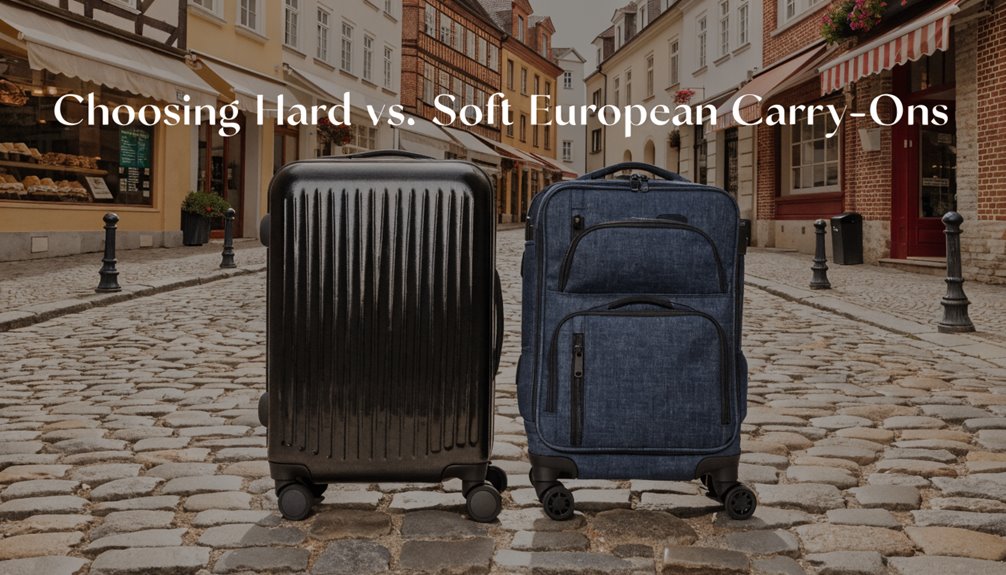
Deciding between hard-shell and soft-shell carry-ons can shape your entire packing and travel experience across Europe. Hard-shell luggage shields electronics well and offers a sleek look but can dent and limits packing flexibility. Hard shells also provide better moisture resistance, protecting your belongings in wet climates. United Airlines requires carry-ons to meet specific size limits, so checking your bag’s dimensions before travel ensures it fits within these carry-on size requirements.
Soft-shell bags handle pressure, abrasion, and cold better, bending to fit tight spaces and expanding for souvenirs. You’ll find soft-shell models usually weigh less and include external pockets for quick access.
Maneuverability depends more on wheel quality than shell type, though hard-shell spinners glide smoothly and stand upright.
Choose based on your priority: rigid protection or flexible, lightweight durability for long trips.
Why Carry-On Backpacks Are Great for Europe

Hard-shell and soft-shell carry-ons each have their perks, but for many travelers maneuvering Europe’s bustling streets and diverse terrain, carry-on backpacks offer unmatched convenience. They free your hands for tickets and steering through crowded transport, handle cobblestones and stairs with ease, and fit snugly in tight spaces. Features like ergonomic design with padded straps and hip belts further enhance comfort during extended wear. Additionally, carry-on backpacks typically conform to Delta carry-on size limits, helping avoid gate-checking hassles.
Backpacks also encourage lighter packing, perfect for short trips and hostels.
- Hands-free mobility in busy environments
- Easy guidance on cobblestones and uneven terrain
- Comfortable for stairs and multi-level transport hubs
- Promotes efficient, lightweight packing for flexibility
How Rolling Carry-Ons Improve Mobility in Europe
When you navigate Europe’s bustling streets and packed public transport, rolling carry-ons can considerably boost your mobility. They let you keep both hands free, so you can maintain balance, hold handrails, or assist companions easily.
Rolling carry-ons glide smoothly through train stations, buses, and airports, reducing setup time during transfers. They maneuver well on cobblestones and uneven sidewalks, sparing you from lifting heavy bags on stairs. However, keep in mind that wheels can break due to rough streets. Airlines like Southwest allow rolling carry-ons with dimensions up to 24 x 16 x 10 inches, including wheels and handles.
Plus, they’re lighter than traditional wheeled luggage, easing physical strain and helping you meet airline weight limits. These features make rolling carry-ons ideal for quick, efficient travel across Europe’s diverse terrain.
Zip-Out Expandability: Avoid Overpacking
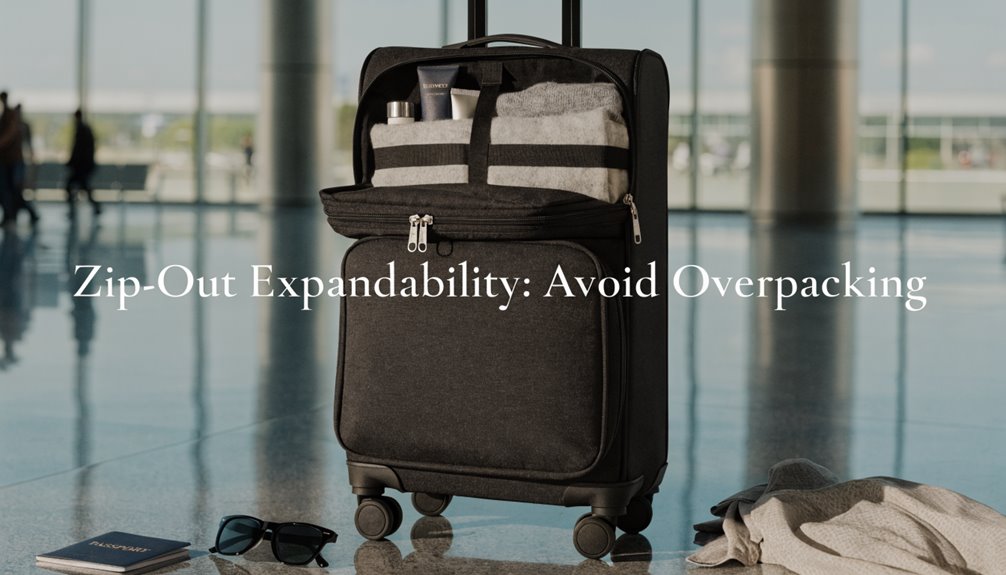
Although packing light is key for efficient travel across Europe, zip-out expandability lets you avoid the trap of overpacking while still accommodating souvenirs and extra items on your return. This feature keeps your carry-on within strict airline size limits outbound but expands when needed, preventing fees and hassle. When choosing a bag, consider the weight carefully to ensure it stays under 7 pounds for easier mobility and compliance with airline restrictions. It is important to weigh bags before travel to ensure they stay within the 8 kg limit set by most airlines including Lufthansa.
Choose bags like Travelpro Platinum Elite or Samsonite S Cure Spinner S for reliable expandability. Remember to use expansion only for return items and confirm airline policies.
- Fits Ryanair, EasyJet size rules unexpanded
- Adds minimal weight, preserving carry-on limits
- Expands for souvenirs without initial bulk
- Supports multi-stop trips with flexible capacity
Maximizing Interior Space With Smart Organization
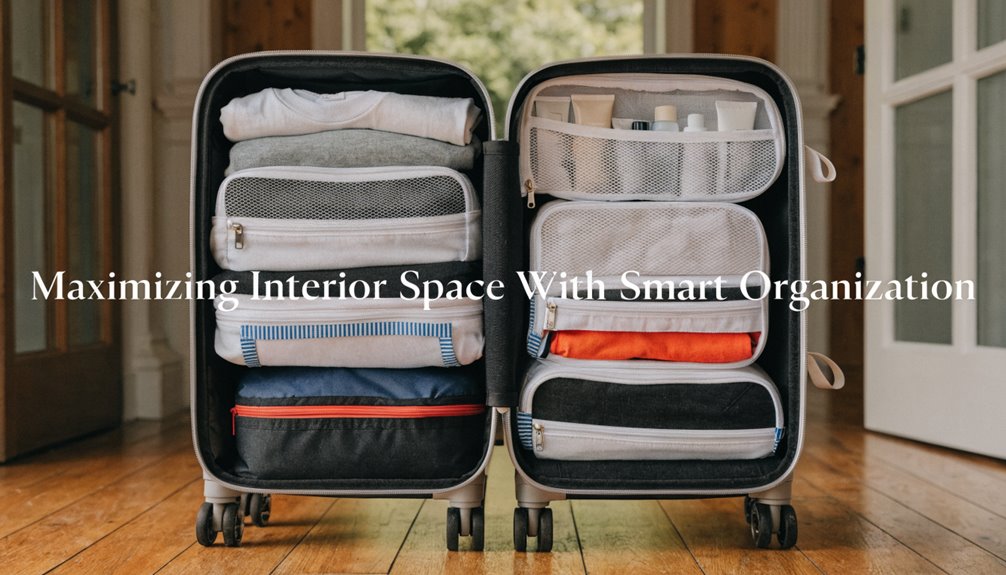
Maximizing the interior space of your luggage depends largely on how you organize your belongings. Use packing cubes or compression bags to group items efficiently, reducing wasted space.
Roll clothes instead of folding to fit more and minimize wrinkles. Place heavier items at the bottom and fill gaps with smaller accessories or socks. Remember to keep your carry-on within the 56 x 45 x 25 cm size limits to avoid gate-checking hassles.
Utilize built-in compartments and external pockets for quick access to essentials. Choosing luggage with compact design helps maximize interior storage without exceeding size limits.
By organizing smartly, you’ll pack more comfortably within carry-on size limits, making your European trip smoother without sacrificing what you need.
Smart packing beats overstuffing every time.
Which Materials Best Withstand Rough European Terrain

If you want your luggage to endure the rough terrain common on European trips, choosing the right material is essential. Hard-sided aluminum cases offer unmatched durability and protection for fragile items but weigh more and cost extra. Soft-sided luggage, preferred by many travelers, balances durability with lighter weight and better portability on uneven streets. Consider your priorities carefully.
- Aluminum guarantees superior breakable protection
- Soft-sided bags are lighter and easier to carry
- Material quality impacts toughness and longevity
- Balance durability and weight for practical use
Wheels and handles that withstand varied surfaces and frequent handling are equally important to ensure smooth maneuverability through cobblestones and other challenging terrains, so prioritize luggage with durable wheels and handles. Also, remember to consider the carry-on size regulations to avoid fees and ensure your bag fits easily in overhead compartments.
Pick materials that suit your travel needs best.
Choosing Wheels for Cobblestone and Airport Surfaces

When selecting wheels for your luggage, you need to take into account the unique challenges of both cobblestone streets and smooth airport floors.
Two-wheel designs with large, durable polyurethane wheels handle cobblestones well, offering stability and shock absorption while preventing jamming. They pull at an angle, reducing strain on uneven surfaces. High-quality ball bearings also contribute to smoother rolling and longer wheel lifespan on rough terrains. It is also important to consider the size restrictions imposed by airlines to ensure your luggage complies with carry-on policies.
Four-wheel luggage shines in airports, providing effortless 360° rotation and upright rolling.
For mixed European travel, prioritize oversized, silent wheels made from durable materials like polyurethane or TPR to facilitate smooth changes, minimize noise, and extend wheel longevity across diverse terrains.
Balancing Durability and Lightweight Design for Europe

Although durability is essential for withstanding Europe’s varied terrains, you don’t want to lug around heavy baggage that slows you down. You need a carry-on that balances strong materials with a lightweight frame. Brands like Travelpro and Samsonite offer resilient options that still meet airline weight limits. Prioritize luggage around these features:
- Lightweight construction under 7 lbs for easy handling
- Durable fabrics and reinforced corners for rugged streets
- Compact dimensions (55x35x25 cm) for airline compliance
- Functional wheel designs for smooth mobility across cobblestones and terminals
Choosing luggage with TSA-approved locks is also beneficial for added security during your travels.
This balance ensures your carry-on stays tough without weighing you down.
Budget Carry-Ons That Don’t Sacrifice Quality
Finding luggage that balances durability and lightweight design is important, but sticking to a budget matters just as much for many travelers. You’ll appreciate options like the Travelpro Maxlite 5, which handles rough roads and smooth airports with ease. This model is known for its quiet wheels and expandable design, enhancing both comfort and capacity.
The Samsonite Freeform Spinner blends a tough hardshell with affordability, while the S Cure Spinner S offers European-friendly sizing without a premium price.
For softside fans, the Eastpak Tranverz S delivers solid build quality at a great value.
Premium Carry-Ons Worth Investing In for Frequent Trips

Investing in one of the top three premium carry-ons can transform your frequent Europe trips by combining durability, functionality, and style. Travelpro, Briggs & Riley, and Rick Steves offer exceptional options built to withstand rugged travel while maximizing space and organization.
These bags feature lightweight frames and spinner wheels designed for cobblestone streets and airport terminals alike. You’ll appreciate expandable compartments and specialized pockets for tech and passports, making your journey seamless. Additionally, many models are designed by Rick Steves, ensuring practicality prioritized in design.
- Aviation-grade materials and reinforced corners
- Lifetime warranty with Briggs & Riley
- Precisely sized for US and European airlines
- Compression straps to keep contents secure
Checking Airline Carry-On Policies Before Booking

How can you avoid surprises at the airport? Always check the airline’s carry-on policies before booking. Budget airlines like Ryanair and EasyJet have strict size and weight limits, often smaller than full-service carriers. Verify the exact dimensions, weight allowances, and any fees for larger bags. Don’t confuse marketing carriers with the operating airline, especially for codeshares. It’s important to note that airline policies can vary significantly depending on fare class and aircraft type. Here’s a quick size and weight guide for common airlines:
| Airline | Max Size (cm) | Weight Limit (kg) |
|---|---|---|
| Ryanair | 40 x 30 x 20 | 10* |
| British Airways | 56 x 45 x 25 | 23 |
| Lufthansa | 55 x 40 x 23 | 8 |
| EasyJet | Small personal item | Varies |
| Wizz Air | 40 x 30 x 20 | 10 |
*Priority boarding required.
Why Paying Early for Carry-On Saves Money on Budget Airlines

Because budget airlines charge considerably more for carry-on bags bought at the airport, you’ll save money by paying for your carry-on when you book your ticket. Buying early locks in the lowest fees, avoiding steep gate or counter charges.
Airlines like Frontier offer bundles including carry-ons, seats, and priority boarding, maximizing savings. Waiting to pay at the airport risks dynamic fee hikes and surprises. Pay for baggage in advance to secure the lowest rates and avoid higher fees at the airport.
- Pre-book carry-ons cost 30-50% less than gate fees
- Bundles like Frontier’s “The Works” combine carry-on and extras
- Online check-in with pre-paid bags avoids airport surcharges
- Early payment prevents last-minute fee spikes and penalties
Frequently Asked Questions
How Do I Clean and Maintain My Carry-On Luggage After European Trips?
You should wipe your luggage’s exterior with mild soap, vacuum the interior, and spot-clean stains. Don’t forget to air-dry it, lubricate wheels, check zippers, and apply protectant yearly to keep it in top shape.
Can I Use European Carry-On Luggage for International Cruises?
Yes, you can use European carry-on luggage for international cruises since they generally allow larger sizes. Just pick a sturdy, lightweight bag like a 21x13x7 hardshell spinner for smooth beginning and easy handling on board.
What Are the Best Packing Tips for Carry-Ons in Europe’s Varying Climates?
You should pack lightweight, layerable clothing, use zip-out expandable bags for flexibility, and organize compartments by climate. Prioritize durable, compact items to save space and weight, allowing you to adapt easily to Europe’s changing weather conditions.
How Do Carry-On Luggage Warranties Typically Work for European Travel?
Carry-on luggage warranties usually cover defects for at least two years in Europe. You’ll need proof of purchase, and brands may offer extended or lifetime warranties. Damages from misuse or unauthorized repairs aren’t covered, so keep your receipt safe.
Are There Recommended Carry-On Accessories for European Airport Security Checks?
Yes, you should use clear, TSA-approved liquid bags, packing cubes for easy screening, a slim electronics organizer, a travel document holder, and a portable charger. These accessories speed up security checks and keep your carry-on organized.
Conclusion
Now that you know the quirks of European carry-on rules, can you afford to ignore them? Imagine breezing through airports without extra fees or hassle. Choosing the right size, weight, and style isn’t just smart—it’s your secret weapon for stress-free travel. Whether you’re eyeing a budget find or a premium splurge, your perfect bag awaits. But here’s the catch: will you book smart and pack light, or risk paying the price?